News

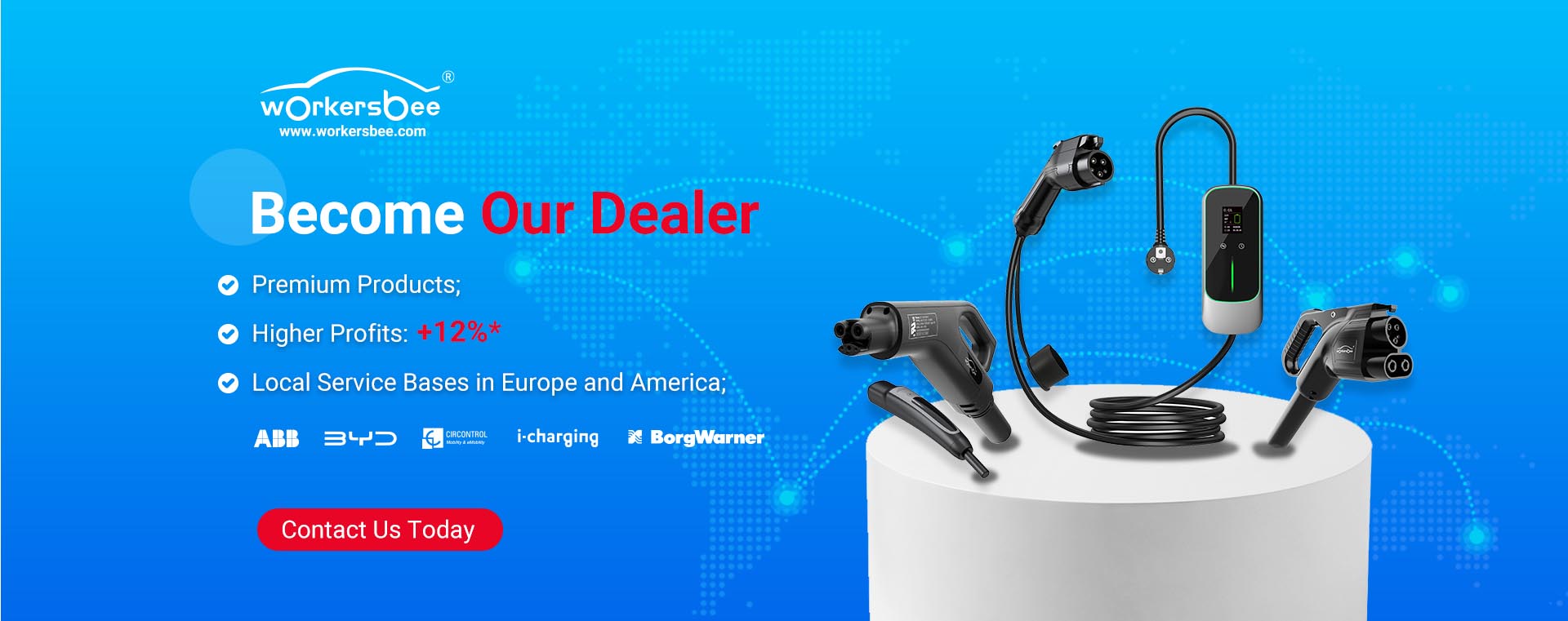
  • Join Workersbee's Global Dealer Network
    September 30, 2024
    Partner with a manufacturer focused on dependable EV charging hardware, practical support, and long-term relationships. This page invites distributors, installers, and solution providers to become authorized Workersbee dealers in selected markets.  We collaborate across the EV charging ecosystem with companies such as ABB, Shell Recharge, Circontrol, VinFast, and BYD.     Why this market, why now Electric vehicle adoption is still accelerating. In 2025, more than one in four cars sold worldwide is set to be electric, with EV sales expected to surpass 20 million units this year.   Charging rollout is scaling, too. By the end of 2024, the global installed base of public EV charge points had moved past five million, buoyed by more than 1.3 million new installations that year—an uplift of over 30% versus 2023. China hosts nearly two-thirds of those public chargers and around three-fifths of the world’s electric light-duty vehicle fleet. Europe passed 1 million public points in 2024, while the United States grew to just under 200,000.   Policy keeps pushing infrastructure forward. The EU’s AFIR requires at least 150 kW fast-charging stations every 60 km on the TEN-T core network by 2025, and mandates fleet-based minimum power availability: 1.3 kW for each battery-electric LDV and 0.8 kW for each PHEV.       What you get as an authorized dealer Certified hardware you can stand behindAutomotive-grade production and products carrying applicable global certifications (e.g., UL, TÜV, CE). Datasheets and certificates are available for due diligence and tenders.   A portfolio that fits multiple use casesPortable chargers, AC Mode 3 cables, vehicle connectors (Type 2, CCS2, NACS), and accessories—covering home, workplace, destination, and light commercial deployments.   OEM/ODM without the painBranding, cable length, housing color, packaging, and documentation can be customized to your market and channels.   Predictable supply, clear pricing, and real supportYou’ll get onboarding for sales/tech teams, co-branded collateral, bid configuration help, and structured after-sales workflows with RMA guidance. Product line at a glance (Workersbee examples)   Portable EV chargers• ePort B (Type 2, single-phase): IP67 enclosure, eight safety protections, 2-inch TFT screen readable in sunlight, Bluetooth app control; sub-3 kg for easy transport; OEM/ODM options. Ideal as a premium, travel-ready L2 solution. • ePort C (22 kW, three-phase): CE-certified, eight safety protections, adjustable current and scheduling via on-device controls or app; supports OEM/ODM branding. Best for fast AC charging where 3-phase is available. • High-power portable (11/22 kW, CEE): up to IP66 on the control box, overheat protection in plug and control box; CE/TÜV/UL listed variants; Type 1, Type 2 or GB/T tails.   Mode 3 EV cables (Type 2 to Type 2)• Up to 22 kW, CE/TÜV compliant, typical lengths 5 m and 10 m; designed for public or home use with durable conductors and insulation.   Vehicle connectors• Type 2 AC plug: 16 A/32 A, 250/480 V AC; IP55; UL94 V-0 materials; insulation resistance >1000 MΩ; contact resistance ≤0.5 mΩ; mechanical lifespan >10,000 mating cycles; operating −30 °C to +50 °C. • NACS DC fast-charge connector: 250/300/350 A, up to 1000 V; IP67; UL2251; −40 °C to +50 °C; silver-plated terminals; 24-month warranty and 10,000 mating-cycle design target.   Standards that matter (and why your customers will ask)SAE’s J3400 North American Charging System is now a formal standard, with a 2025 J3400/2 update covering connector and inlet dimensions to improve performance and compatibility—relevant for both station operators and fleets standardizing hardware.     Who should apply • National or regional distributors serving electrical wholesalers, installers, EPCs, or B2B e-commerce • Charging solution providers and system integrators bidding on public or private projects • Professional installers moving from solar, storage, or general electrical into EVSE   Territories and baseline requirements • One-country-one-dealer arrangements may apply in selected markets subject to service coverage and performance• Priority openings are updated regularly—ask for the current list• Typical entry: a starter order, a quarterly activity plan, and basic in-country capability for warranty handling     How onboarding works 1. ApplyShare your company profile, target territory, channels, and product interests. 2. QualificationWe review territory availability and fit, then align on a provisional plan and pricing tier. 3. Pilot and trainingPlace a pilot order, complete product and service training, and finalize co-branded assets. 4. Authorization and launchReceive your authorization letter, go live with co-marketing, and align on first-quarter targets.   Proof points you can show customers • Market tailwinds: EVs on track for 25%+ of 2025 global car sales; public chargers more than doubled since 2022, with 1.3 million added in 2024 alone. • Compliance roadmap: EU AFIR’s distance-based and fleet-based targets set clear expectations for fast charging coverage and minimum national capacities—useful in RFPs. • Certification access: public UL/TÜV/CE references and downloadable certificates for key connectors (e.g., NACS DC, CCS2) to support bids and approvals.     FAQs What support do dealers receive?You’ll have access to product and sales training, co-branded collateral, configuration guidance for bids, and after-sales workflows. A dedicated contact helps with pricing, delivery dates, and technical questions.   Is there a minimum order or annual commitment?We usually start with a focused pilot order and activity plan that fits your channels and territory. We’ll confirm targets and review quarterly.   Which markets are open now?Availability changes as partners are assigned. Tell us your country or region and we’ll confirm the current status and requirements.   Can you do OEM/ODM branding?Yes. We support logo, label, cable length, plug housing color, packaging, and documentation across portable chargers, cables, and connectors.     How to apply Email info@workersbee.com with: company name and website, registered address, contact person and role, target country or region, current channels, product categories of interest, expected quarterly volume range, and any active bids you want to supply.
    Read More
  • Workersbee Reviews 2026 Europe Charging Data as Market Shifts Toward Capacity, Reliability, and Regional Fit
    June 29, 2026
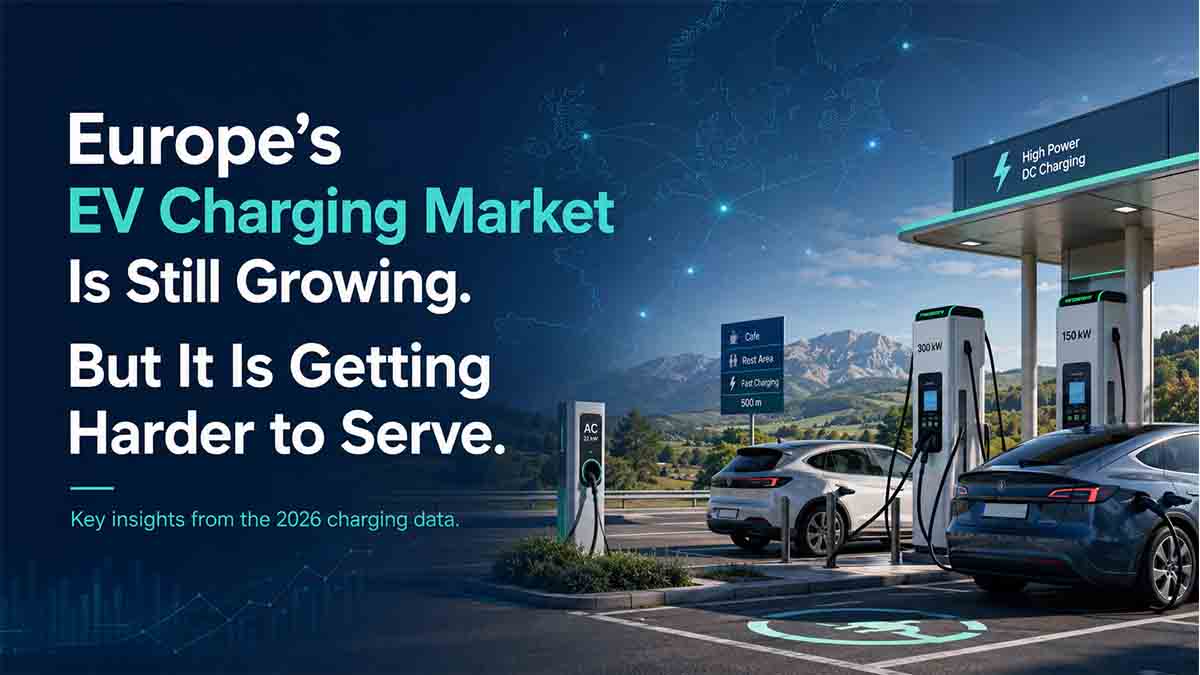
    Europe’s EV charging market continues to grow, but the latest charging data shows that the next stage of infrastructure development will be more complex than simply adding more public charge points.   According to the 2026 Europe charging data, the region now has more than 11.4 million battery electric vehicles and over 1.2 million public charge points. In 2025, BEV growth reached 28%, while public charge point growth reached 19%. At the same time, total public charging capacity grew by 36%, reaching 48.1 GW.   For Workersbee, these figures point to a clear market signal. Charger count still matters, but the market is increasingly shaped by charging capacity, high-power infrastructure, regional differences, grid constraints, and the field reliability of charging hardware.   For charging connector, cable, and inlet suppliers, this shift makes thermal stability, mechanical durability, sealing performance, and scenario-specific component design more relevant to customer decisions.     Charging Capacity Is Becoming a Stronger Signal The difference between public charge point growth and charging capacity growth is one of the strongest signals in the report.   Public charge points increased by 19% in 2025, while total public charging capacity increased by 36%. In other words, Europe is not only adding more chargers; it is increasing the capability of the public network.   The report also shows that the average public charging speed reached 43 kW, while the share of ultra-fast chargers above 150 kW increased to 11.8%. This points to a continued shift toward higher-power charging, especially in public fast charging, highway charging, commercial charging hubs, and fleet-related use cases.   For high-power charging sites, hardware performance becomes more visible. Cables, connectors, vehicle inlets, locking systems, temperature monitoring, and cooling structures need to support repeated operation under real field conditions, not only meet rated specifications on paper.   As charging power and site utilization increase, the gap between rated performance and field performance becomes more expensive for operators.     Europe Is Not One Charging Market The report also shows that Europe should not be viewed as one uniform charging market. Different countries and regions are moving through different development stages. This affects infrastructure planning, product selection, certification priorities, inventory planning, and after-sales support.   Germany has a large public charging base and a strong number of ultra-fast chargers above 150 kW. For this type of market, high-power DC infrastructure, CCS2 systems, liquid-cooled cable options, thermal stability, and uptime-focused components become especially important.   The Netherlands has one of Europe’s largest public charging networks, with a strong 7.4–22 kW charging base. In this type of mature mid-speed market, AC and mid-speed charging maintenance, replacement, destination charging, and power-mix upgrades still have a role.   The UK has a different structure. Its market combines home charging, curbside charging, public slow charging, and rising ultra-fast charging. This means the UK cannot be understood only through public fast charging. Home charging access and curbside infrastructure also play a central role.   In the Nordics and Benelux, high EV adoption and mature charging density make replacement cycles, uptime, weather resistance, winter performance, and utilization more visible in procurement. In Eastern Europe and the Baltics, stronger BEV or charging capacity growth from a lower base creates different needs, including new infrastructure deployment, cost-effective products, stable supply, and project support.   For EVSE manufacturers, CPOs, distributors, and component suppliers, these regional differences are not minor details. They influence which product portfolio, technical message, service model, and local support structure will fit a customer’s real market.     Mainstream EV Adoption Raises the Bar for Charging Experience Charging demand is also being reshaped by the vehicles entering the market.   The report shows that Europe had 463 available BEV models in 2025, with 63 new models added during the year. Average retail price fell by about €2,800, while average battery capacity stayed close to 73.3 kWh and average range remained near 390 km.   More models, lower prices, and stable range suggest that EVs are moving closer to mainstream users.   That changes expectations around charging. Early EV drivers often accepted fragmented apps, uncertain charger availability, unclear pricing, and more planning. Mass-market users will be less forgiving.   They will expect charging to be simple, predictable, and reliable. They will care about whether they can charge near home, whether the charger works, how long they need to wait, whether the price is clear, and whether payment is easy.   This raises the standard for charging infrastructure. Charging hardware must support not only technical performance, but also user experience, site availability, and long-term operation.     Home Charging Remains Important, But Public Infrastructure Still Has a Critical Role Residential charging remains one of the foundations of EV adoption in Europe.   The report shows that around 65% of EV charging in the UK happens at home, compared with about 56% across Europe. The UK also has a higher share of EV owners using home chargers at their usual residence.   Home charging is usually cheaper and more convenient. But access to home charging is not equal. It depends on housing type, parking access, ownership status, and local infrastructure.   For users without private parking, public charging, curbside charging, workplace charging, and destination charging become more important. In dense urban areas, public charging is not only long-distance infrastructure. It can also act as a substitute for home charging.   This is why the next stage of EV charging will not be solved by one charging type alone. Type 2 AC charging components, curbside charging systems, residential charging, workplace charging, destination charging, fleet charging, and high-power DC charging all have different roles.   For hardware suppliers, this means product development and support must match specific use cases rather than assume one standard charging scenario.     CPOs Are Facing More Complex Energy and Operating Conditions For CPOs, the business model is also becoming more demanding. The earlier phase of charging infrastructure was largely about site acquisition, charger installation, and network expansion. Those factors still matter, but high-power charging and higher utilization create new operating challenges.   A charging site now needs to be assessed through grid connection capacity, peak demand cost, energy pricing, utilization, uptime, and maintenance requirements. The report also highlights technologies and strategies such as dynamic load management, peak shaving, battery energy storage, PV integration, grid signaling, tariff optimization, and flexibility services.   This does not mean every CPO will become an energy trader. But it does mean that charging operations are becoming harder to separate from energy management.   For high-power charging sites, equipment reliability is closely tied to operating cost. A cable, connector, or inlet failure does not only create a technical problem. It can reduce uptime, interrupt charging revenue, increase maintenance cost, and damage user trust.     What This Means for Charging Components As Europe’s charging market moves toward higher capacity and more specialized use cases, charging components will face higher expectations.   For high-power DC charging, thermal stability, current handling, temperature monitoring, cooling reliability, and sealing performance become more visible in product selection. This is especially relevant for CCS2 DC connectors, high-current charging cables, liquid-cooled charging cables, and EV charging inlets used in public fast charging and commercial charging sites.   For public charging and high-utilization sites, mechanical durability, cable handling, locking systems, strain relief, and field maintenance become more important. A component that works under controlled test conditions still needs to perform reliably under repeated plugging, outdoor exposure, user handling, and maintenance cycles.   For outdoor installations, material stability, waterproofing, dust protection, UV resistance, and performance under changing weather conditions become part of long-term reliability.   For CPOs and EVSE manufacturers, total cost of ownership is increasingly linked to component behavior in real operating conditions. A lower-cost component may not remain cost-effective if it increases downtime, replacement frequency, maintenance work, or user complaints.   Workersbee’s product development focus aligns with this shift. EV charging connectors, charging cables, vehicle inlets, and high-power cable solutions need to perform reliably under real site conditions, not only under laboratory ratings.   As Europe’s charging market becomes more segmented, reliable charging components will play a larger role in helping partners respond to different market needs, from Type 2 AC charging and curbside charging to CCS2 DC fast charging and liquid-cooled high-power charging.     Looking Ahead Europe’s EV charging market is still expanding. But the next stage is not only about adding more chargers.   The market is becoming more specific. Different countries need different charging mixes. Different users have different charging behavior. CPOs must manage energy cost, grid constraints, uptime, and maintenance. EVSE manufacturers and component suppliers need to think beyond rated output and focus more on field reliability, serviceability, and scenario fit.   For Workersbee, the key signal from the 2026 Europe charging data is clear: the future of EV charging infrastructure will depend not only on deployment volume, but also on whether charging hardware can support real operating conditions across different markets.   To request the complete Europe Charging Report 2026 or discuss component solutions for AC charging, high-power DC charging, liquid-cooled cable systems, and regional EV charging projects, please contact the Workersbee team.
    Read More
  • Workersbee Highlights Connector Reliability as DC Fast Charging Moves Toward Higher Power
    April 28, 2026
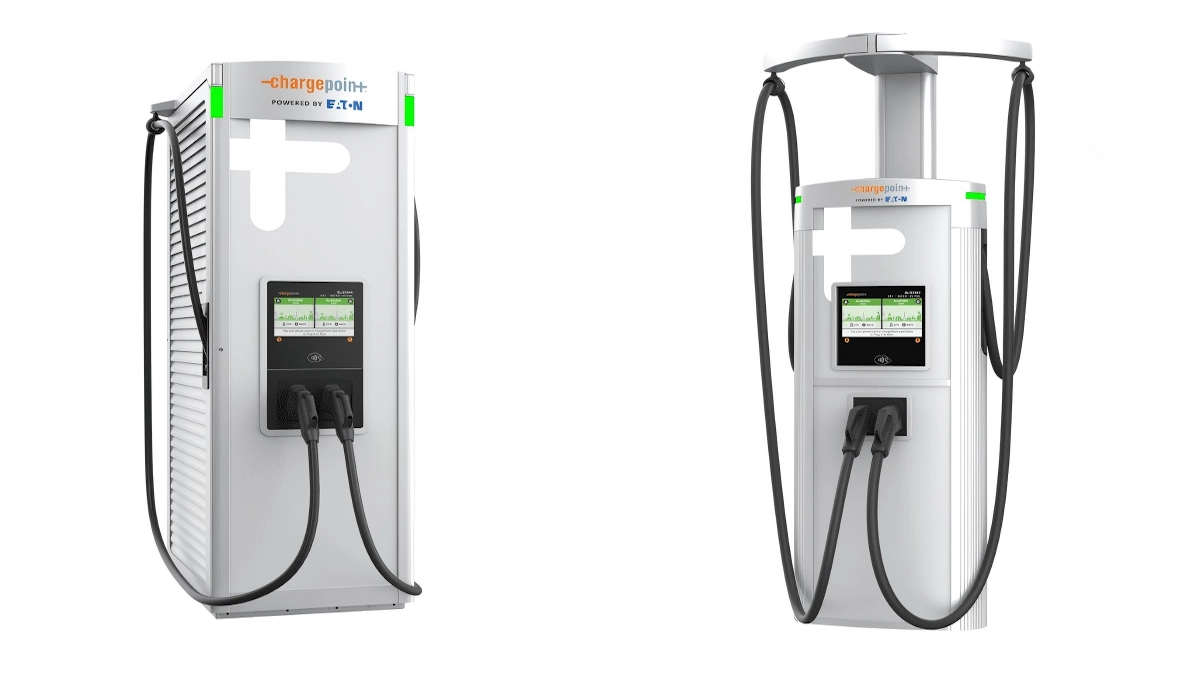
    As 600kW DC fast charging enters wider industry discussion, Workersbee sees renewed attention on a practical question for charger manufacturers and infrastructure operators: how reliably can the charging interface support higher power in real operating conditions?   One recent example is ChargePoint’s Express Solo 600kW DC fast charger, which has been introduced with support for both NACS and CCS and power sharing across multiple charging ports. For Workersbee, the more important signal is not only the peak power number, but the direction of public charging infrastructure: higher utilization, multi-standard compatibility, and stronger expectations for long-term hardware reliability.   For EV drivers, 600kW is easy to understand as a speed number. For charger manufacturers, station operators, and project developers, the engineering question is more complex. Higher power places greater stress on the connector-to-vehicle interface, especially during repeated high-current charging sessions at busy public sites.   A DC fast charger does not perform through the cabinet alone. The connector, cable assembly, terminal contact area, and cooling structure all influence whether high-power charging can remain stable in real operating conditions. At higher current levels, small changes in contact resistance or heat dissipation can have a much larger impact on thermal performance.   The ongoing transition between NACS and CCS also adds practical complexity. In North America, many sites need to serve current CCS vehicles while preparing for wider NACS adoption. This makes charging interface design and component selection more important for charger manufacturers, station operators, and project developers planning for multi-standard deployment.   For Workersbee, this shift reinforces the importance of designing EV charging connectors and cable assemblies around real operating conditions, not only rated values on a datasheet. High-current performance, thermal stability, mechanical durability, cable handling, and compatibility need to be considered together.   Workersbee supports global charging projects with EV charging connectors, cable assemblies, portable EV chargers, and related charging components, with DC connector options covering naturally cooled and liquid-cooled designs for different fast-charging requirements.   As DC fast charging moves toward higher power and higher site utilization, connector reliability will become more directly connected to uptime, maintenance planning, and charging experience. For the next stage of fast-charging infrastructure, power output will still matter, but the reliability of the charging interface will matter just as much.
    Read More
  • Workersbee Starts at KEY Expo on March 4 and Welcomes Visitors at Booth A3/133
    March 05, 2026
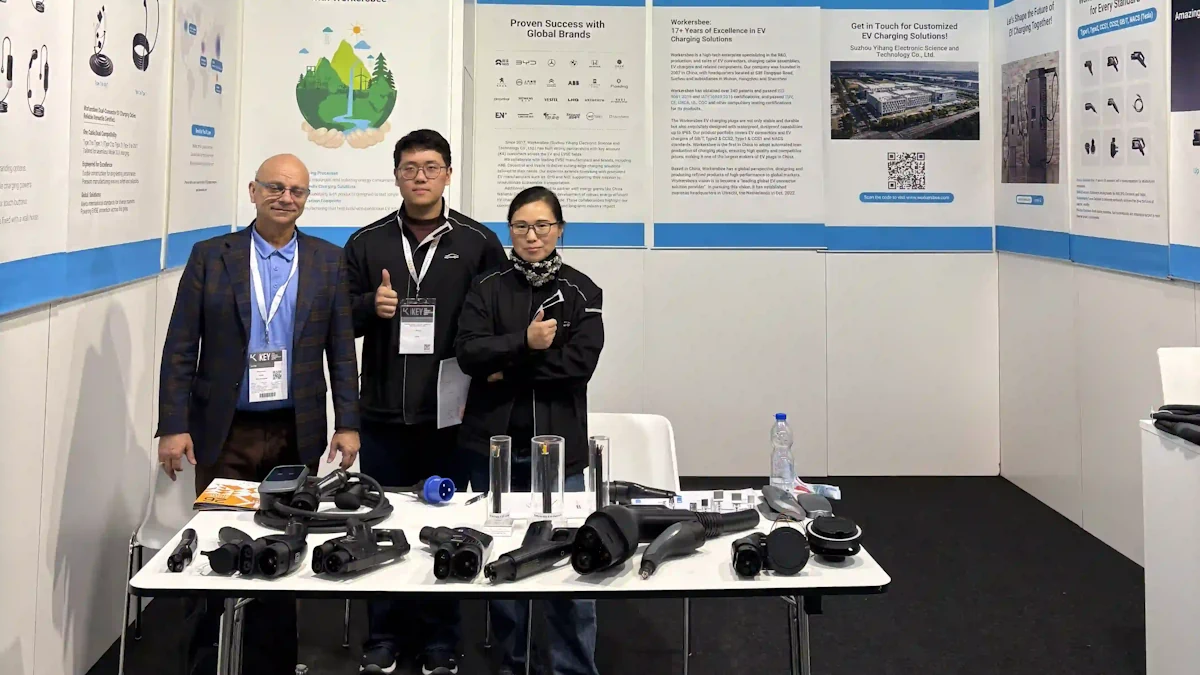
    KEY Expo officially opened on March 4, and Workersbee has started the exhibition in Rimini, Italy.   On the first day of the show, the Workersbee team welcomed visitors at Booth A3/133 and began face-to-face conversations with customers, partners, and industry professionals from different markets. The event creates a valuable opportunity to meet on-site, introduce products, and discuss real business needs in the EV charging industry.         At the booth, Workersbee is presenting a range of EV charging solutions, including EV connectors, charging cables, portable EV chargers, and liquid-cooled charging products. Visitors can take a closer look at the products, speak directly with the team, and explore suitable solutions for their market and project requirements.     As one of the important industry events in the energy and e-mobility sector, KEY Expo brings together companies and professionals working across charging infrastructure and clean energy. For Workersbee, it is also a good chance to strengthen existing partnerships and connect with new customers.   Visitors attending KEY Expo are welcome to stop by Booth A3/133 to meet the Workersbee team and talk about product details, cooperation opportunities, and future projects.
    Read More
  • Workersbee to Exhibit at KEY - The Energy Transition Expo 2026 in Rimini
    February 09, 2026
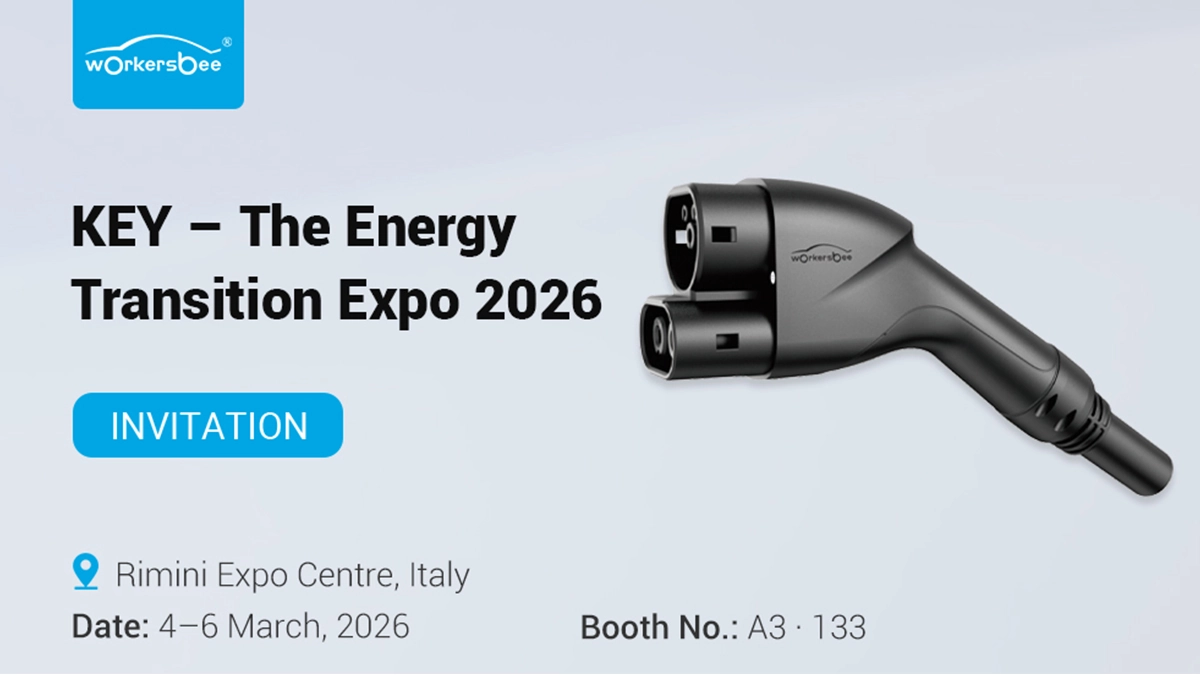
    Workersbee will exhibit at Rimini Expo Centre, Italy, from 4-6 March 2026 during KEY - The Energy Transition Expo 2026. Visitors can meet our team at Booth A3/133 to discuss EV charging interconnection solutions and upcoming charging projects across Europe.   At the show, Workersbee will present key product families designed for real-world fast-charging deployment. Highlights include our CCS2 400A naturally-cooled DC connector solutions for stable high-current performance, along with flexible portable EV charging options for temporary and on-the-go use cases. We will also showcase MCS (Megawatt Charging System) connectivity for heavy-duty electrification where high power, robust thermal management, and long duty cycles matter.   Workersbee's CEO, Mr. Ye Ning, will attend in person. Partners and customers are welcome to schedule a face-to-face discussion about OEM/ODM cooperation, supply partnership planning, and technical alignment for new programs.   Event details Event KEY - The Energy Transition Expo 2026 Dates 4-6 March 2026 Venue Rimini Expo Centre, Italy Booth A3/133     To book a meeting at the booth, please reach out to the Workersbee Overseas Sales Team in advance. We look forward to meeting in Rimini and supporting your next EV charging infrastructure project.
    Read More
  • Fast-Charging Growth in the U.S.: What Operators Need to Get Right in 2026
    February 05, 2026
    U.S. public fast charging added fresh momentum in 2025, with a record year for new DC fast-charging ports. The headline is expansion, but the practical story is what happens after expansion: as multi-stall sites become more common, performance is judged less by how quickly a network grows and more by how consistently it stays available.   That shift is easy to miss until utilization climbs. Larger sites run more sessions per day, see more repeat handling of the same hardware, and face a higher volume of small incidents that can turn into downtime. When a few stalls go offline at a busy location, the impact is immediate. Queues form faster, customer frustration rises, and the maintenance backlog becomes harder to clear with the same field resources.   In many cases, the earliest reliability pressure does not come from the power cabinet. It shows up at the last meter where customers interact with the system: the handle, the cable, sealing surfaces, and the points where heat and mechanical stress accumulate over time. A stall can be perfectly powered and still fail sessions because a connector runs hot under sustained use, a cable develops fatigue near a high-flex area, or repeated twisting and dragging creates intermittent faults that lead to retries.   Multi-stall layouts make everyday handling a reliability factor. Public sites see cables pulled at awkward angles, bent tighter than intended, dropped, dragged, and twisted when parking positions are not consistent. Over time, these patterns drive avoidable wear and repeat tickets on the same stalls. Sites that treat cable routing and holstering as part of station design, not a finishing detail, usually reduce preventable failures and improve consistency across seasons.   When failures do happen, the fastest lever is field serviceability. Operators benefit most from hardware and documentation that support a predictable return-to-service path: diagnose the symptom quickly, swap what needs to be swapped with minimal tools, and complete a short verification check before leaving the site. In practice, that means evaluating connector and cable sets as service components, not just electrical interfaces. For teams aligning hardware choices with uptime targets, DC charging connector and cable assemblies are increasingly assessed through this operational lens.   To keep decisions consistent across different site types, a compact scorecard helps align engineering, operations, and procurement around the conditions that drive real-world downtime. It also prevents a common mistake in fast-charging deployments: selecting based on peak ratings while underestimating duty cycle, ambient heat, handling stress, and maintenance capacity.   High-Utilization Site Scorecard (Operator View) What to evaluate Naturally-cooled approach tends to fit when... Liquid-cooled approach tends to fit when... Utilization profile Sessions per day and duty cycle continuity Moderate use with recovery time between peaks High duty cycle with back-to-back sessions Continuous delivery need Stability over time vs short bursts Stable output is achievable within a lower continuous envelope Stable output is required at higher continuous loads Ambient and heat soak Hot days, sun exposure, enclosure heat Heat conditions rarely push the system into derating Heat conditions often push the system toward derating Cable handling stress Layout, routing, bend-radius control, public abuse Handling stress is controlled and routing is forgiving Handling stress is high and wear risk rises quickly Maintenance model In-house vs outsourced, response time expectations Service windows can tolerate more variability Service model favors predictable performance and fewer callbacks Downtime tolerance Operational cost of an offline stall Single-stall outages are less disruptive Offline stalls quickly create queues and reputational impact     The buildout story will continue through 2026, but the networks that scale smoothly will be the ones designed to be maintained at scale. That means choosing components that behave predictably under sustained use, and designing service workflows that restore uptime quickly and consistently. For high-utilization sites where continuous delivery and thermal stability are the binding constraints, liquid-cooled DC connector solutions may be part of that approach, but the takeaway is broader: at scale, maintainability is no longer secondary to deployment speed.
    Read More
  • Season's Greetings as Workersbee Enters 2026
    December 23, 2025
    As the holiday season approaches and the year draws to a close, Workersbee would like to extend warm season’s greetings to our partners, customers, and industry peers around the world.   2025 has been another year of steady progress for the global EV charging ecosystem. Across regions and markets, charging infrastructure continues to evolve toward higher power levels, greater reliability, and wider deployment. Behind every charging session, dependable components and well-engineered connections remain essential to keeping systems running safely and consistently.   At Workersbee, our focus throughout the year has remained unchanged: designing and manufacturing EV charging connectors and related components that support stable, long-term operation. From product development and testing to manufacturing and quality control, every step is driven by the same goal—delivering connections that perform reliably under real-world conditions.   As we enter 2026, the industry will continue to move forward. New vehicles, new charging standards, and higher performance requirements will shape the next stage of electrification. Workersbee will continue to work closely with OEMs, charging solution providers, and partners worldwide, supporting this transition with dependable charging interfaces built for continuous use.   The holiday season is also a moment to reflect and to say thank you. We appreciate the trust and collaboration of our global partners, as well as the dedication of our teams who make this work possible every day.   Season’s greetings from Workersbee, and we look forward to powering what comes next together in the year ahead.
    Read More
  • Workersbee Thanksgiving Message: Thank You for a Year of Trust and Teamwork
    November 24, 2025
    Thanksgiving provides a great opportunity to pause for a moment and express gratitude.   To all our customers and partners, thank you for choosing to work with Workersbee this year. Every project you bring to us comes with real expectations from real sites. Your standards, questions, and field feedback are what help us improve how our connectors and charging components behave outside the lab, where weather, traffic, and daily wear all test reliability.   This has been a fast-moving year for e-mobility. We have seen new charging sites open, fleets scale up, and more drivers depend on stations that simply work when they arrive. In the middle of that pace, the best results always come from close cooperation. Whether we were supporting high-traffic public stations, fleet depots running around the clock, or installations in harsh environments, your collaboration helped turn ideas into stable, repeatable performance.   We also want to thank every Workersbee colleague for what you put into this year. Behind each delivery lies a complex chain of careful design, rigorous testing, production discipline, and meticulous coordination. Some teams pushed through tight validation cycles. Others stayed late to solve last-minute issues before shipments. Many of you carried an extra workload quietly so customers would not feel the pressure. That kind of work does not show up in a single photo, but it shows up every time charging just works.   We are grateful for the trust outside the company and the effort inside it. Thank you for building this year with us. Wishing you and your loved ones a warm, restful Thanksgiving.   Workersbee Team
    Read More
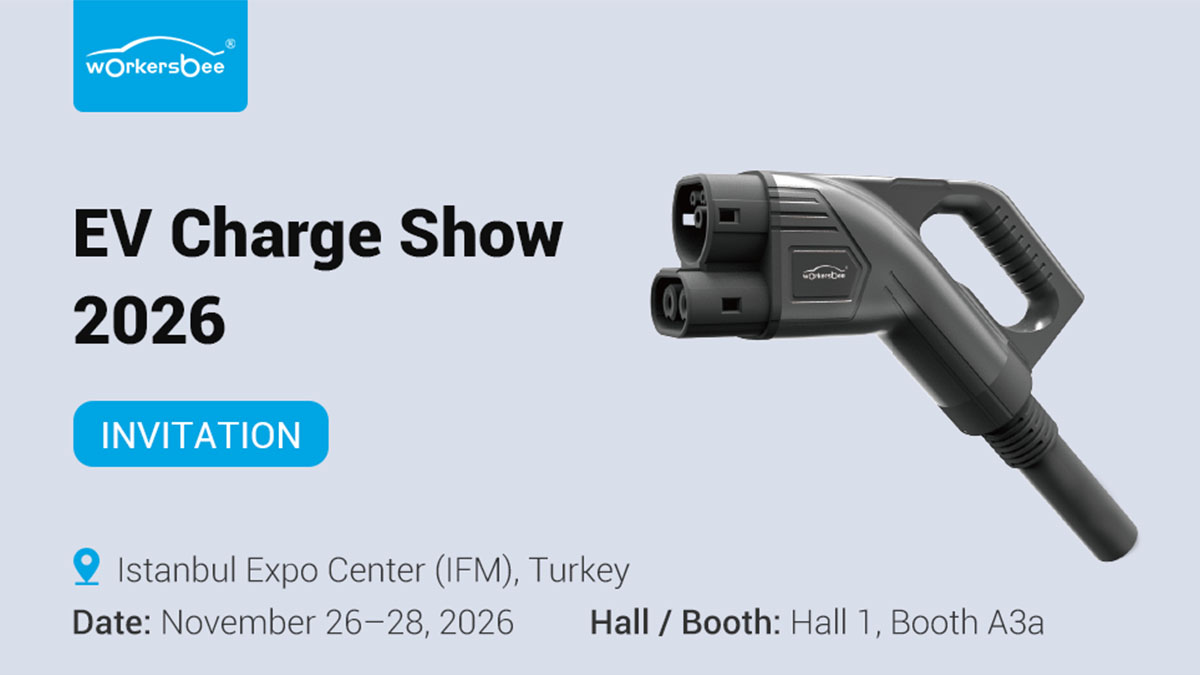
  • Workersbee Engages with Global EV Charging Community at EV Charge Show in Istanbul
    November 13, 2025
    EV Charge Show has opened its doors at Istanbul Expo Center, and Workersbee is on site meeting face-to-face with EV charging professionals from across different regions.   On November 12 (local time), the Workersbee team welcomed visitors from Europe, the Middle East, and other markets at Hall 3, H5b. Throughout the first day, the team spoke with charge point operators, distributors, engineering companies, and manufacturers about real-world charging projects and everyday challenges in the field.       Many conversations focused on topics such as: • How to choose reliable DC connectors for high-power charging • Liquid-cooled vs naturally cooled solutions in different climates • Connector and cable durability under frequent use • Safety, uptime, and maintenance for public fast charging sites • Addressing the ultra-high power charging needs of heavy-duty trucks, buses, and other sectors, and discussing related application plans and technical pathways for MCS (Multi-Channel System).     By listening to the practical experience of installers and operators, the Workersbee team is collecting first-hand feedback on how products perform beyond the test bench. These insights help refine connector design, improve cable handling comfort, and better support customers who manage large charging networks.     At the booth, visitors can see and touch a range of Workersbee solutions for DC fast charging, EV connectors, and related components, and discuss how these can be adapted to local standards, site layouts, and project timelines. The team is also sharing ideas on how to balance performance, cost, and long-term reliability when planning new charging sites or upgrading existing ones.   EV Charge Show will continue in the coming days, and Workersbee welcomes all attendees to visit the booth, exchange ideas, and explore potential cooperation.   Venue: Istanbul Expo Center, TürkiyeHall / Booth: Hall 3, H5b
    Read More
  • NEVI Funding Resumes: What This Means for DC Fast-Charging Projects
    October 23, 2025
    The U.S. NEVI program is moving again. After months of uncertainty, FHWA issued the FY2026 funding notice on October 1 and several states have begun updating or reopening their application windows. For site developers, that means stalled proposals can be refreshed—quickly and with a tighter focus on buildability and uptime.     What actually changed Funding unlocked for FY2026. FHWA’s notice sets out the new allocations and a 10% set-aside to help states that need extra assistance. Streamlined guidance from USDOT. Revised NEVI guidance (Aug 2025) emphasizes faster approvals and more flexibility for states to get stations built. States are updating plans. Example: New York’s 2025 NEVI plan update was approved in September, a sign that state processes are back on track.     What it means for developers and operators Move stalled projects to “submission-ready.” Recheck each state’s addendum (timelines, cost-share, documentation). Expect small but meaningful changes to support letters, site control, grid status, and ADA details.   Design for a mixed connector reality. The market continues to converge on NACS plus CCS1. Even charger OEMs are adding NACS cable options to mainstream DC platforms—planning layouts and cable management for both now protects utilization.   Uptime is the differentiator. Application scoring and public sentiment both reward sites that start cleanly (payment on first try, solid click-in, stable power) and stay online. NEVI paperwork is necessary; reliable field execution is what drivers remember.     Workersbee’s take We see two practical priorities for the next wave of NEVI sites: Cable/connector strategy that matches your vehicle mix (Tesla/NACS drivers plus CCS users) without complicating operations. Thermal and strain-relief discipline to keep high-power sessions stable across seasons—especially at busy highway sites.     How Workersbee can help Pre-engineered DC connector & cable kits: CCS1/CCS2 (naturally-cooled and liquid-cooled) with field-proven strain relief and holstering layouts. NACS integration support: harnessing, reach, and holster geometry to coexist with CCS on the same dispenser. Submission-ready drawings: stall reach maps, cable sweep envelopes, and parts lists that slot into your NEVI packet.   If you’re refreshing a paused application or scoping a new corridor site, contact our team for a one-page checklist and a connector/cable BOM tuned to your state’s current requirements.
    Read More
  • Workersbee to Join EV Charge Show 2025 in Istanbul
    October 14, 2025
      EV Charge Show is one of Türkiye’s focused trade events for electric mobility, held at the Istanbul Expo Center. The show brings together charge-point operators, fleets, e-mobility service providers, component makers, and distributors from Türkiye, the Middle East, and Europe.   Visitors can see complete charging systems on the floor, alongside the parts that make them work—connectors, cables, power modules, cooling systems, and software. This practical mix is why we chose it as our regional stop in November.     Workersbee will exhibit in Hall 3, Booth H5b from 12–14 November 2025. Our booth will highlight hardware that customers in public and depot charging ask about the most:   CCS2 2.0 liquid-cooled connector (800 A) – built for sustained high current with liquid cooling for temperature control during long sessions.   Megawatt Charging System (MCS) model – a preview for heavy-duty trucks and buses; the production version is planned for release next year.   Flex Charger (portable AC) – a compact unit with interchangeable mains plugs, letting distributors and service teams match local outlets without swapping the charger.     About Workersbee Workersbee is a manufacturer of EV charging hardware serving OEMs, station builders, and distributors across Europe, North America, and Asia. Our product range covers DC and AC connectors and cables, portable chargers, and related accessories.   We focus on practical details that matter in the field: thermal management, ergonomic grip, serviceability of wear parts, and clear labeling for technicians. Production and testing are carried out in Suzhou, China, with reliability checks that simulate real-world charging conditions.     What to expect at the stand Our team will run hands-on demos of the 800 A CCS2 connector and the Flex Charger, and we’ll show the MCS model to discuss interface, cable handling, and likely deployment timelines. If you work on public fast charging, fleet depots, or regional distribution in Türkiye and surrounding markets, we’re happy to talk through use cases, certification needs, and supply planning.     Event details  Dates: 12–14 November 2025  Venue: Istanbul Expo Center, Türkiye  Hall / Booth: Hall 3, H5b   We welcome partners, customers, and anyone comparing options for next year’s projects to stop by and have a straightforward discussion.
    Read More
  • NACS Lands on Wayne PWR: What Dual-Standard Sites Should Change First
    October 10, 2025
    When a mainstream cabinet like Wayne PWR adds a NACS cable option, it’s not just another spec update. It signals a shift from “adapter workarounds” to native, side-by-side support for NACS and CCS1 at the site level. That changes design choices, queue logic, cable management—and ultimately the driver’s first 30 seconds at the charger.     What happened Dover Fueling Solutions has enabled NACS cable configurations on its Wayne PWR DC fast chargers. The platform already spans multiple power tiers (commonly 160–640 kW in the current lineup), and now site hosts can deploy CCS1, NACS, or a mix across units. In plain terms: forecourts can meet Tesla/NACS demand without relying on adapters, and they can scale NACS share over time as traffic data justifies it.       Why it matters for operators 1) Queueing and bay assignment become real product decisions.Mixed connectors at one site sound simple—until a busy hour exposes bottlenecks. If two adjacent dispensers each carry different leads (say one NACS and one CCS1), your on-screen routing, app copy, and ground signage decide whether drivers self-sort or gridlock. A practical pattern we see working: dedicate some cabinets to dual-lead (NACS + CCS1) where dwell is high, and keep single-lead cabinets for throughput lanes. Make the choice predictable from the drive-in sightline (pylon, bay markers, screen headers).   2) Power-sharing strategies need a rewrite.Cabinets with shared rectification will juggle different vehicles and charge curves. A NACS EV arriving hot from the highway may immediately request high current; a CCS1 EV on a cold pack will ramp slower. Your algorithm should prefer pairing complementary curves on the same cabinet to reduce throttling. Even a small improvement in pairing logic shows up as fewer complaints and more kWh sold per hour.   3) Cable management and thermal behavior are now day-one priorities.As currents rise, cable weight, bend radius, and return path become failure vectors. Avoid floor drags and tight S-curves; design a clean return-to-hook path that a first-time driver can follow without thinking. For most mixed sites, starting with air-cooled NACS leads at ~200–250 A is a rational baseline. Plan structural allowance—boom arms, hanger geometry, or side-exit guides—so you can upgrade to liquid-cooled assemblies on the busiest bays without reworking the pedestal or plinth.   4) Retrofit math looks better than many expect.For brownfield stations that already run CCS1, adding NACS is often a cable/lead-side change plus UI updates, not a total cabinet swap. That keeps capex and downtime predictable. The catch: don’t underinvest in UX signals—screen labels, bay signage, and app flows. Most “reliability” complaints in mixed sites trace back to ambiguous instructions, not electronics.   5) Maintenance SOPs should call out connector-specific checks.Do nightly sweeps for twists, kinks, and incomplete re-hangs. Add quick-glance checks for latch wear, debris in inlet areas, and any hot-spot patterns on high-use bays. Instrument your helpdesk scripts so agents ask the right first two questions for NACS vs CCS1 sessions; fast triage cuts truck rolls.     A phased rollout blueprint (90 days) Phase 1 — Instrument & signal (Weeks 0–3) Pick two bays to carry dual leads (NACS + CCS1). Update UI copy: before-plug screen shows “Choose the connector that matches your vehicle: NACS or CCS1.” Add wayfinding: pavement icons and head-height markers that drivers can see from 15–20 m.   Phase 2 — Tune the pairing logic (Weeks 3–6) Use session data to identify curve conflicts (e.g., two hot packs starving a third). Adjust cabinet pairing: high-ramp NACS with medium-draw CCS1 where possible. Track % sessions ≥90 kW within 60 s as a leading indicator of perceived performance.   Phase 3 — Decide where liquid-cooled pays (Weeks 6–12) If two NACS bays exceed 30% of site kWh and average cable temp margins narrow at peak, justify liquid-cooled on those bays. Keep one adjacent bay on air-cooled for redundancy and to cover shoulder periods economically.     Practical details that reduce headaches Left/right lead planning: align the default return path with the majority vehicle inlet position for your mix, so drivers aren’t twisting cables across the chassis.   No-drag discipline: if the hook design still causes belly-drag, add a mid-span guide rather than asking drivers to “be careful”—human factors always win.   One-screen, no jargon: on screen, avoid “J3400/NACS” or “SAE this/that.” Use NACS and CCS1 terms with simple icons.   Tighten the first 30 seconds: tap-to-pay acceptance, connector latch feel, and immediate current ramp set the memory of “this site works.”     Where Workersbee can help EV connector engineering support: connector choice, current targets, and thermal headroom for your vehicle mix.   High-current cable routing: hanger geometry, bend-radius checks, and return-to-hook paths that lower strain and trip risks.   Liquid-cooled EV cable solutions: phased upgrades on the busiest bays without altering your pedestal footprint.   Standards aren’t about picking a side; they’re about meeting your traffic with the least friction. Wayne PWR’s native NACS option makes the dual-standard era tangible, and the winners will be the sites that fix the boring details—queue logic, cable paths, and first-tap flow—before the crowds arrive.
    Read More

leave a message

leave a message
If you are interested in our products and want to know more details,please leave a message here,we will reply you as soon as we can.
  • Attach Files
Contact us:info@workersbee.com